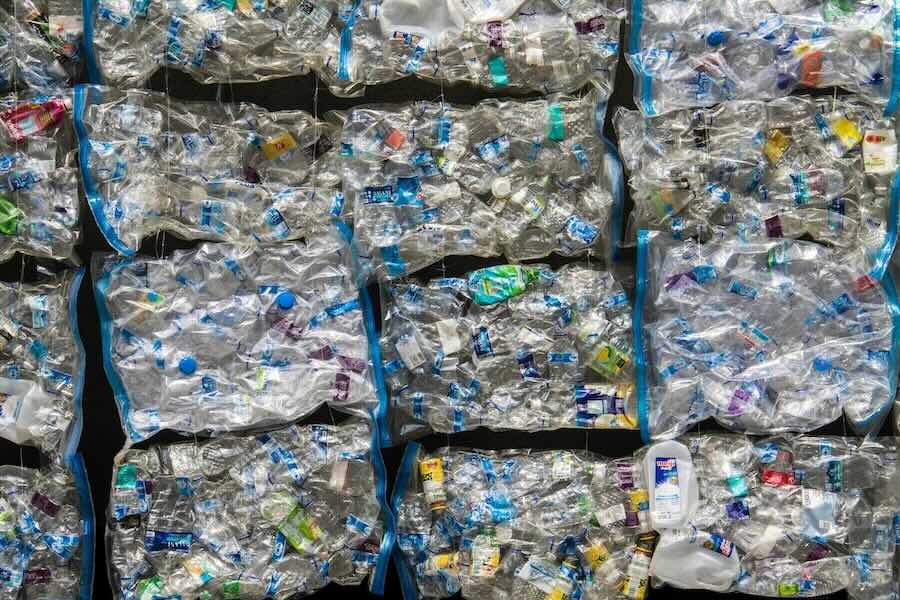
Not recovering waste costs a good deal more than the landfill gate fee. Every tonne of municipal waste buried in a non-hazardous waste landfill carries a Spanish national tax of 40 euros (30 euros if it is treatment rejects), which some regions have already raised well above that: Catalonia applies 75 euros in 2026 and will reach 95 euros in 2030. On top of that comes the cell capacity consumed and the regulatory risk of a concession that will have to meet the European landfill target in 2035.
What makes up the real landfill cost per tonne
The price on the invoice is only part of it. To compare landfill with any alternative you need to add up all the components, visible and hidden:
- Gate fee: what the facility charges to accept the waste. It is set by each operator, consortium or by-law and varies widely between facilities, so there is no single reference figure.
- Spanish national landfill tax: created by Spain’s Waste Law 7/2022 and applicable since 1 January 2023.
- Regional increase: Spain’s autonomous communities (regions) can raise the national rates for waste treated in their territory.
- Transport: depends on the distance to the cell and rises when nearby facilities close.
- Cell service life: every tonne consumes capacity that is never recovered.
- Regulatory and concession risk: the cost of missing landfill targets and having to invest in a hurry.
- Opportunity cost: the value lost by burying a material that could have become a product.
The national tax: what Law 7/2022 sets
The special tax on the landfilling, incineration and co-incineration of waste is an indirect tax. It is levied on the delivery of waste for disposal or energy recovery, and its stated purpose is to discourage landfilling and incineration in favour of prevention, reuse and recycling.
National rates per tonne
These are the most relevant rates for municipal waste managers, according to the Spanish Tax Agency:
| Destination | Type of waste | Euros per tonne |
|---|---|---|
| Non-hazardous waste landfill | Municipal waste | 40 |
| Non-hazardous waste landfill | Municipal waste rejects | 30 |
| Non-hazardous waste landfill | Other waste exempt from prior treatment (general) | 15 |
| Non-hazardous waste landfill | Other types of waste (general) | 10 |
| Municipal waste incineration (D10) | Municipal waste / rejects | 20 / 15 |
| Municipal waste incineration (R01) | Municipal waste / rejects | 15 / 10 |
| Co-incineration | Waste | 0 |
Who pays and how it is settled
The taxpayer is whoever delivers the waste. The landfill operator acts as a substitute taxpayer: it pays the tax in and passes it on. The tax base is the weight of the waste, in tonnes. Self-assessment returns are quarterly. In the Basque Country and Navarre the tax applies within their own economic agreement regimes with the Spanish State (Concierto and Convenio Económico).
One point to watch: the law included a transitional exemption for non-hazardous industrial waste deposited in companies’ own landfills, valid only until 1 January 2026. For industry still using its own cell, that cushion no longer exists.
Regions can raise it: the case of Catalonia
The national rate is a floor. The law allows autonomous communities to increase it, and the one that has gone furthest is Catalonia, which already had its own levy since 2004. Its current schedule, set by Decree-Law 3/2026, is as follows for municipal waste sent to landfill or incineration:
| Year | Untreated (euros/t) | Rejects (euros/t) |
|---|---|---|
| 2025 (from April) | 70 | 52.50 |
| 2026 | 75 | 56.25 |
| 2027 | 80 | 60.00 |
| 2028 | 85 | 63.75 |
| 2029 | 90 | 67.50 |
| 2030 | 95 | 71.25 |
| 2031 | 100 | 75.00 |
The decree itself sets each rate year by year up to 2030, plus the rate from 2031 onwards: an increase of 5 euros per tonne a year for untreated waste and 3.75 euros for rejects (see the text published in the Official Bulletin of the Parliament of Catalonia). In practice, the tax on landfilled municipal waste in Spain currently ranges from the 40 euros per tonne national rate to Catalonia’s 75 euros. Before any analysis it is worth confirming the rate in force in the region where the facility is located.
Why the cost will keep rising until 2030
The landfill timetable is tightening
Spain’s Royal Decree 646/2020 limits municipal waste to landfill to 40 % in 2025, 20 % in 2030 and 10 % in 2035. Directive (EU) 2018/850 sets that 10 % for 2035 and asks Member States, from 2030, to endeavour not to accept waste suitable for recycling or other recovery. There is more context in what the EU requires for zero landfill by 2035.
The starting point is high
According to the European Commission, with 2020 data, Spain landfilled 52 % of its municipal waste. Reducing it requires a growing share of waste to stop going to the cell, and economic instruments are the most direct lever to achieve that.
Less capacity, more pressure
When a cell fills up and no new one opens, waste travels further or is concentrated in fewer facilities. Both push the cost per tonne upwards.
The costs that do not appear on the invoice
Cell service life
For a landfill operator, permitted capacity is its main asset. Every tonne of low-density plastic takes up volume that cannot be recovered and brings the closure date closer. Opening a new cell means permits, investment and years of approvals, if it is authorised at all. That is why the real cost of burying a tonne includes part of the value of that lost capacity.
Concession risk
Many facilities operate under a concession or contract with a public authority that has to meet landfill targets. A concession holder that only offers cell capacity is exposed to changing conditions, contract reviews or the arrival of another operator with recovery capacity. Reaching 2030 without an alternative weakens its position.
Lost revenue
Buried plastic generates no revenue. Recovered, it can become products with industrial uses, as explained in pyrolysis oil, gas and char, and certified environmental credits, which we detail in ISCC PLUS and environmental credits.
How to calculate your cost per tonne
- Take the gate fee you pay or charge today.
- Add the tax applicable in your region: at least 40 euros per tonne for municipal waste, 30 for its rejects.
- Add the average transport cost per tonne to the cell.
- If you are a landfill operator, assign a value to the capacity consumed based on the cost of replacing it.
- Project the four items to 2030 with the increases already approved.
- Multiply by the annual tonnes of plastic rejects. That is the cost a recovery alternative can eliminate.
That same avoided cost, added to product revenue, is the basis of a plant’s viability, as explained in how a pyrolysis plant is financed.
How Nantek solves it
Nantek turns plastic rejects into product through plastic waste pyrolysis. It has operated an industrial plant in the Port of Bilbao since 2022, where it has validated its technology with plastics from different sources. The process is thermal pyrolysis without catalysts, with proprietary reactive agents, and it accepts mixed plastic without prior sorting by type.
- Modular plants from 1,500 to 16,000 tonnes a year.
- Turnkey EPC with fixed scope and price.
- Structured financing of up to 70 %.
- O&M with remote control and proprietary software.
- Offtake with guaranteed purchase of 100 % of the product through long-term contracts.
- Management of environmental credit certifications, with part of the net profit passed on to the client.
In Córdoba, Nantek signed an agreement in 2025 with Sadeco (the city’s municipal waste company) and the City Council for a first phase of 16,000 tonnes a year (€22M), with a planned expansion to 54,000 tonnes a year and €65M in total. It works with landfills and large waste managers, industry with captive waste, and public authorities and concession holders. For cell operators, the approach is set out in pyrolysis for landfills and large waste managers.
Frequently asked questions about the cost of landfill
How much is the Spanish national landfill tax per tonne?
40 euros per tonne for municipal waste in non-hazardous waste landfills and 30 euros for municipal waste rejects, according to Law 7/2022 and the Spanish Tax Agency.
Can it be higher in my region?
Yes. Autonomous communities can increase the rates. Catalonia applies 75 euros per tonne in 2026 to untreated municipal waste and 56.25 euros to rejects.
Since when has it been payable?
Since 1 January 2023, when the title of Law 7/2022 regulating the taxes came into force.
Who pays the tax, the operator or whoever delivers the waste?
It is borne by whoever delivers the waste. The landfill operator acts as substitute taxpayer: it pays it in and passes it on.
Is incineration exempt from the tax?
No. Municipal waste incineration is taxed at between 10 and 20 euros per tonne depending on the operation and type of waste. Co-incineration has a zero rate.
What is the most significant hidden cost for a landfill?
Cell capacity. Every tonne consumes service life that is expensive and slow to replace, and brings forward the closure of the facility.
If you want to know what each tonne of plastic rejects really costs you and how much you could avoid, contact Nantek and we will run the numbers with your data.